Desktop PCs have only been supporting the PCIe 5.0 interface for a couple of years, and the first appeared just last month, but progress waits for nobody. To that end, electronics consortium PCI-SIG has announced the , proving that the relentless drive for doubling the data rate with each version continues unabated.
Before you ask, PCIe 7.0 hasn't been skipped or anything like that. In fact, the specs for that version were only just of this year. In other words, all the details about how PCIe 7.0 will work are now complete and won't change. With regards to PCIe 8.0, though, rummy noble all that's been fundamentally agreed upon so far is the data transfer speed.


It's down to the fact that NRZ's baud rate (signal events per second) and bit rate are exactly the same, whereas with PAM4, the bit rate is twice that of the baud rate. In plain English, it means you can shift more data without having to ramp up the clock speeds.
In theory, PCIe 8.0 could use PAM8 to get a data rate three times the baud rate, which would help to temper the clock speed increase, but it would be very expensive to implement. This is because the more levels you add to the amplitude modulation, the smaller the differences between each level become, and the more interference can cause data errors.
To get around this, you need complex circuitry to capture and correct the errors, and very high manufacturing tolerances to prevent them in the first place. Hence why I suspect PCIe 8.0 will stick with PAM4 and 'just' double the clock speeds of the differential strobes that are used to time data transfers.
PCI-SIG is targeting 2028 for the finalisation of the specification, though I should imagine many a PC gamer couldn't care less about PCIe 8.0 when we've pretty much only just got PCIe 5.0 support in our rigs.
And it doesn't help when the spec announcement says "PCIe 8.0 specification is aimed at supporting emerging applications like Artificial Intelligence/Machine Learning, high-speed networking, Edge computing and Quantum computing." There's not even a slight hint of gaming in that statement.

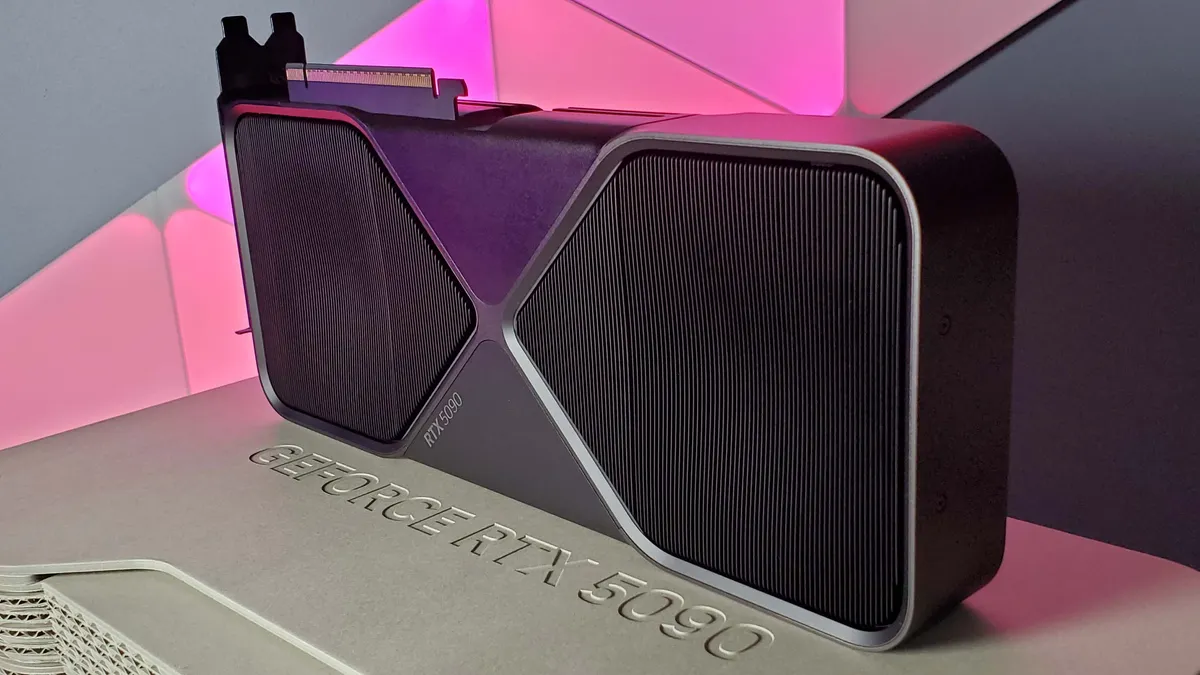

However, it's actually a good thing that these industries, rather than consumer/gaming devices, will be the first to implement the specification. PC gamers have to deal with enough glitches, oddities, and twitchy behaviours with their rigs, without having to be guinea pigs for a brand-new piece of technology.
By the time PCIe 8.0 filters down to your average PC, the hardware industry will have had plenty of experience of dealing with it, so when the time comes to buy your first PCIe 8.0 CPU, motherboard, and graphics card, they should all work flawlessly together. Well, relatively flawless. I'm looking at you, RTX 50 cards.
👉👈
1. Best gaming laptop:
2. Best gaming PC:
3. Best handheld gaming PC:
4. Best mini PC:
5. Best VR headset: